






I suppose I owe my fondness for stinky cheese to my Uncle Don, who, when I was about 6 years old, returned from the war in Europe shellshocked – in a good way – by his discovery of odorous fromages.

The house to which he returned harbored three generations: Grandma Nana; Mom, Dad, Aunt Rose and now Uncle Don; and, of course, little me.
The six of us didn’t all live under that one roof on Central Blvd out of choice. In 1944, when Don got discharged, the Depression wasn’t in the rearview mirror yet and a post-war boom was nowhere in sight. We lived a hardscrabble existence. My dad and Don managed to keep food on the table by hunting – rabbits, squirrel, and an occasional pheasant – and fishing for catfish and crappies in the nearby canal.

So, we ate well…though, perhaps…differently.
What puzzled me a bit was that every now and then Uncle Don would take a trip to Monroe, Wisconsin and return with a brick of the stinkiest package I had ever smelled. The first time he did so, I asked the obvious question: “WTF?” (I paraphrase). He laughed and told me it was catfish bait.
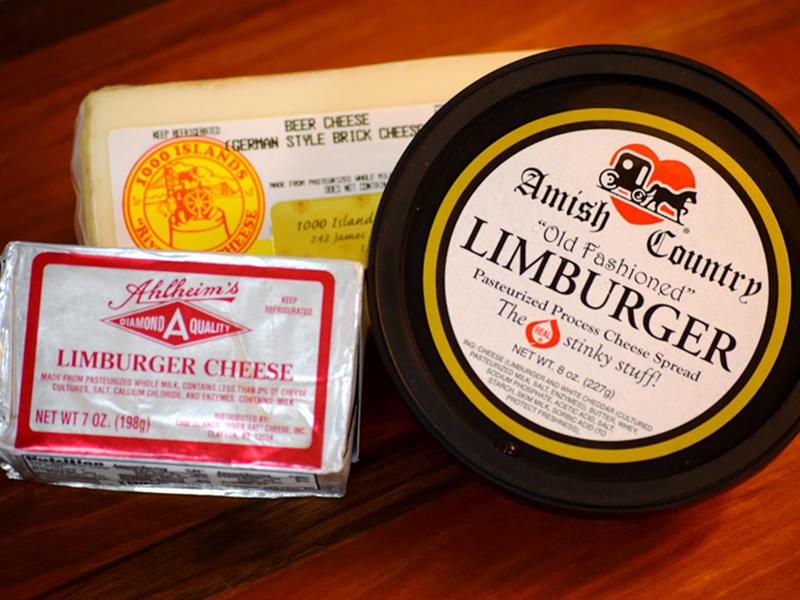
I bought that explanation. After all, on our way to fish for catfish, my Dad and I would often stop at Sears Roebuck (they sold EVERYTHING) and buy a tin can of foul, moist, cheesy paste labeled “catfish bait.” I stunk like hell we’d hold our noses while we’d try our best to hand-form it around treble hooks. he fish went crazy for it.

Back to Uncle Don and the mysterious Wisconsin trips. It turns out that he’d discovered this cheese during the war somewhere in northern France near Belgium, and later learned that it was produced domestically in Monroe. It was called LIMBURGER – considered by many to be THE WORLD’S STINKIEST CHEESE.


Because all six of us gathered for meals at our round dinner table, Don felt perfectly comfortable unwrapping his prize from Wisconsin and placing it dead center for all to enjoy.
The first time this happened, Aunt Rose – I kid you not – vomited at the smell. My Dad swore…out loud. Grandma Nana made a quiet graceful exit.
I don’t recall my mom’s reaction, but I know that Uncle Don, the cheese, and I were the only ones remaining at the dinner table.
“C’mon, Phil. Try it,” cooed Uncle Don, like a drug dealer. “Take a bite. It won’t hurt you.”
I’m certain that there is a formal expression for the feeling of your brain telling you to stay far away and your heart making you want to try it. I fell for the latter and bit off about a square inch…and to my surprise found that the flavor was much milder than the smell suggested.

I can still see the look of approval from Don as he then opened a paper bag from Steele’s downtown bakery, pulled out a loaf of dark rye bread (the blackest bread I’d ever seen), and proceeded to cut and layer it with generous slices of Limburger and raw red onion.
“There,” he said. “That’s how we eat it in Belgium.”
That was my introduction to – and the birth of my affection for – STINKY CHEESES.

Time flies…and suddenly it’s college days. I’m sitting in a booth at the Moose Club in downtown Champaign, Illinois with Joanne, my bride to be. It must have been “splurge night” because Joanne paid a 50-cent supplement to get Roquefort cheese atop her wedge salad. Suddenly it was 1944 again and I was at the kitchen table all alone with Uncle Don and a slab of Limburger.



“C’mon Phil, try it.” You don’t say no to Joanne either. And so, I did. And a long-lost sensation came over me. “Golly!” I exclaimed. “That stinks so good!”


In the years to follow, I became fond of all manner of ripe, nasty-smelling cheese, including most all the blue cheeses. Roquefort, Gorgonzola, Danish Bleu, Stilton….even goat milk blue cheese.



Some are crumbly, some creamy, but they all stink, some better than others. Limburger’s distinctive smell derives from the same bacteria responsible for foot odor. As the cheese ages, it develops the pungent aroma of used gym socks and BO. You may even detect undertones of jock strap.



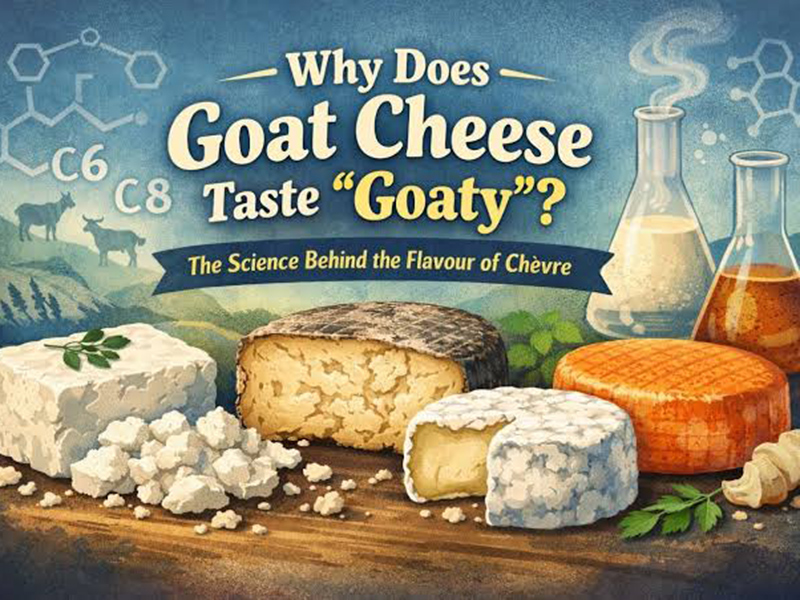
About the goat cheese, heed a word of caution: Occasionally, it can be, well, “GOATY.” It’s not a good taste…not a good taste at all.


It can get GOATY from being stored too long, or from the time it’s made. During the breeding season, when a doe goes into heat, she is penned up with ole horn-dog Billy who stimulates the production of hormones that change the flavor of the milk. So instead of being creamy, mild and tangy, it becomes musky and – what’s the word? ANIMALIC – with a pungent he-man odor.


Just don’t tell Uncle Don.